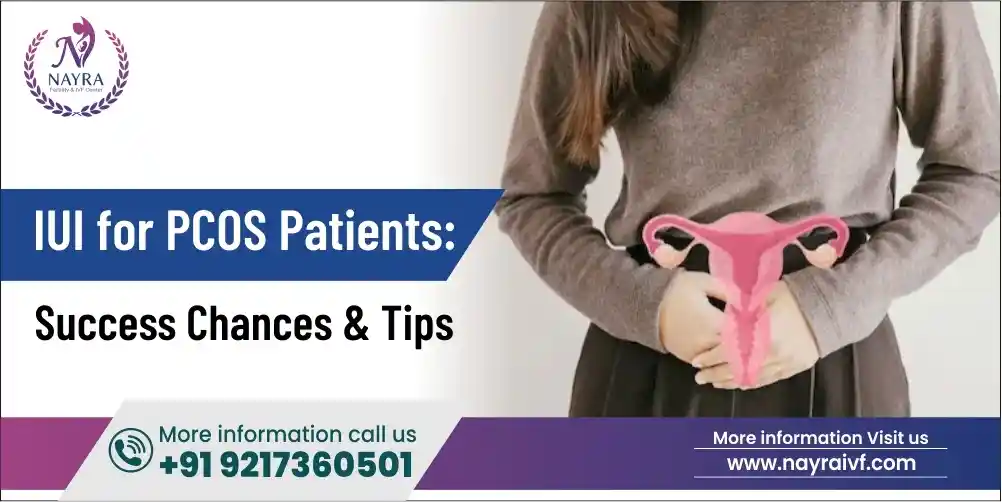
PCOS can be overwhelming, especially for a woman who always wants to conceive and start a family. Around 8 to 13% of women are affected by this condition, and it is stated as one of the notable fertility issues. But to your peace of mind, there are some effective fertility treatments like IUI, or intrauterine insemination, that have proven their efficacy rate in successful pregnancies among PCOS women. So, this less invasive procedure is not only effective for male infertility but also beneficial for managing female infertility. In this procedure, sperm is directly placed in the uterus during ovulation, which increases the possibility of conception. With advanced follicular monitoring and customized protocols, Nayra IVF offers the best IUI Treatment in Noida, increasing the success rate of pregnancies among PCOS women.
Understanding PCOS and Its Impact on Fertility
PCOS, or polycystic ovary syndrome, is a common but serious hormonal disorder affecting women. It is the main cause behind disruptive ovulation that makes conception challenging. There is a wide range of health issues, including both physical and mental, that are associated with this condition. Some notable health issues that women experience are painful and irregular menstrual cycles, an increased level of male hormones, and the presence of polycystic ovaries. Although PCOS interferes with healthy ovulation, it is not entirely impossible to get pregnant. With a doctor-regulated customized plan, changing hormonal medications, and a healthy lifestyle, your PCOS condition can be managed. Led by Dr. Preeti Singh, we at Nayra IVF offer personalized treatment plans for PCOS patients, which increase their chances of pregnancy.
How is IUI conducted?
Before discussing the success rate of IUI for PCOS patients, it is important to have a complete idea of how this procedure is conducted.
Step 1: Ovulation
The fertility doctors examine when you are ovulating so that sperm can be injected at the right time. To determine the ovulation period, luteinizing hormone levels are monitored. This hormone determines the rate of production of eggs by regulating the growth of mature eggs. Fertility specialists prescribe blood tests and a transvaginal ultrasound to monitor the hormone level and identify the growth of mature eggs. In most cases, IUI is combined with fertility medications to stimulate your eggs. Within 24 to 36 hours of adequate luteinizing hormone detection, sperm is inserted into your uterus (insemination).
Step 2: Semen sample preparation
While fertility medications (human chorionic gonadotropin) are administered, semen or sperm is collected and prepared within a span of 24 to 36 hours. After collection, sperm is washed, and a concentrated amount of healthy sperm is collected. Now it is ready for insemination.
Step 3: Insemination
This is the final step in the IUI procedure and takes a couple of minutes to complete. A speculum is inserted into the vagina, and then a catheter is inserted into the uterus through the cervix for injecting the washed sperm. For 10 to 30 minutes, you are advised to lie down after this process, and afterward, progesterone hormonal injections are given so that the uterus can support an early, healthy pregnancy. At Nayra IVF, Dr. Preeti Singh offers clinical guidance and a customized path for the best IUI treatment.
Factors Influencing IUI Success Rates with PCOS Patients
With around 98% of successful pregnancies within the first three cycles, IUI has become a less invasive treatment option for PCOS patients. Therefore, it is an effective alternative option compared to more invasive treatments like IVF or ICSI. But there are some factors that regulate the best IUI treatment outcomes,which are discussed below.
Age of the woman
A woman’s age is always the top-listed factor for fertility. Women who are under the age of 35 have a better chance of success in IUI compared to those who have crossed this age threshold. This is because younger women have more mature eggs than older women.
Ovulation Regularity
Women who are battling against PCOS do not ovulate systematically. Therefore, they undergo several cycles of ovulation induction (OI) to get pregnant. But when OI fails and patients attempt IUI treatment, it shows positive outcomes without affecting the success rates. In these cases, fertility specialists administer several medications, such as Clomiphene or Letrozole, for successful ovulation regularity that increases the chances of IUI success. The live birth rates also become successful among PCOS patients, regardless of the previous ovulation induction cycles.
Weight Management
It is one of the core lifestyle factors that is responsible for controlling the success ratio in IUI treatment cases. It is clinically proven that if PCOS patients maintain weight through a nutritious diet and exercise, then ovulation improves and thereby increases the efficiency rate of IUI. Not only this, but clinical research studies have confirmed that women with PCOS are 3 to 6 times more likely to have eating disorders compared to women who do not have PCOS. Therefore, it can complicate the whole weight management system schedule. For this, you need an expert opinion and a customized diet plan controlling both your appetite and weight.
Underlying Health Conditions
PCOS comes with several underlying medical conditions. This includes insulin resistance, which can interfere with the IUI success rate. Therefore, addressing this condition is of the utmost necessity. For this, doctors prescribe metformin, which manages insulin levels in the body and improves the rate of fertility. Other natural ways are also adopted for managing insulin resistance through myoinositol and making changes in lifestyle, such as diet and exercise.
Semen Quality
The quality of the sperm is indeed a notable factor in IUI success rates. When IUI treatment is administered among PCOS women, good-quality sperm compensates for the female infertility rate to a level. So, when a washed and concentrated amount of sperm is used in IUI treatment, it increases the chances of conception even though the woman is struggling with hormonal imbalances leading to low egg quality and disruptive ovulation.
Conclusion
IUI treatment for PCOS is progress in reproductive medical science. Fertility doctors are opting for this treatment to regulate infertility in women caused by PCOS because it is a non-surgical procedure with no notable side effects. It serves as the primary step for women with PCOS, offering an opportunity not only to get pregnant but also to increase the chances of successful live births. If you have been struggling with PCOS for a long time and natural conception has been impossible even with hormonal pill medications, then opt for the best IUI treatment in Noidaat Nayra IVF.